I used to shy away from learning Hypertext Markup Language (HTML) because it just seemed too difficult. However, once I practiced it, I realized that it provides me so much more control over my webpage content. If you find yourself avoiding HTML for this reason or any other, then this screencast is for you.
This screencast demonstrates how to create a simple HTML document structure. This is aimed at helping beginner-level HTML designers learn basic elements to use on any desired webpage.
HTML is simply the structure of a webpage. Although there are websites (such as WordPress) that design this structure for you, learning and using HTML gives you more freedom over your webpage content. For a great list of HTML commands (also called tags), visit the W3C School.
My screencast will help you to:
Establish the document,
Create a heading,
Create a body, and
Create paragraphs.
Once you practice basic HTML tags, you will see how easy it is to build upon these elements. Check out the video below and share your thoughts.
When I was a military instructor, I spent lots of time teaching in the classroom. I remember the day interactive whiteboards (IWB) were installed because it transformed both how I taught and how my students learned.
Just as the name implies, IWBs combine computer technology with whiteboard capabilities. It requires an IWB and a projector to be connected to the computer. The IWB projects your computer screen and functions as a touchscreen enabling you to navigate the computer or run programs with the touch of your finger or a pen tool. You can digitally write on the screen, highlight selected areas and much more.
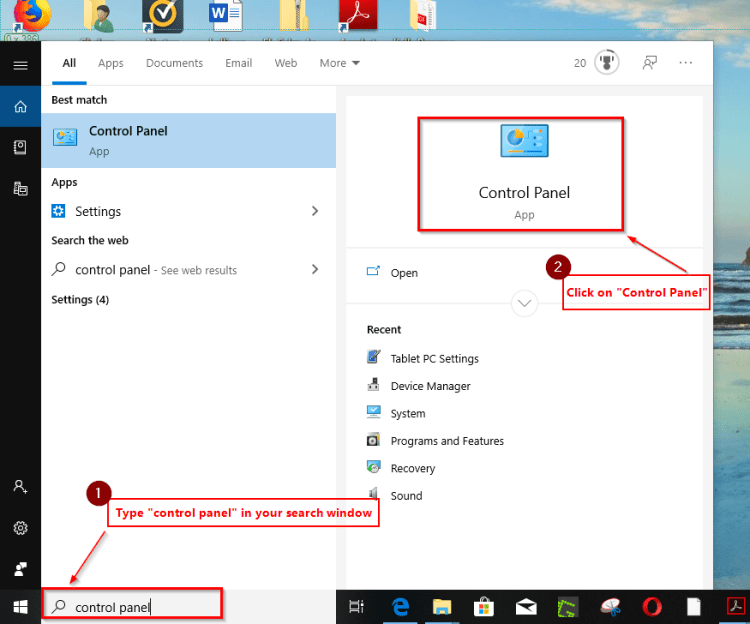
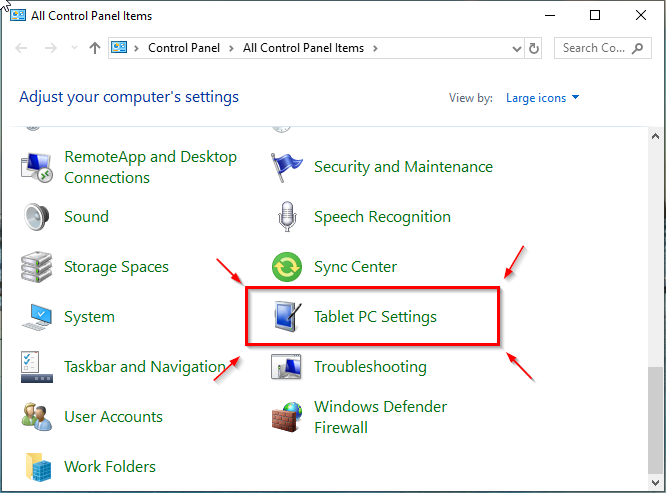
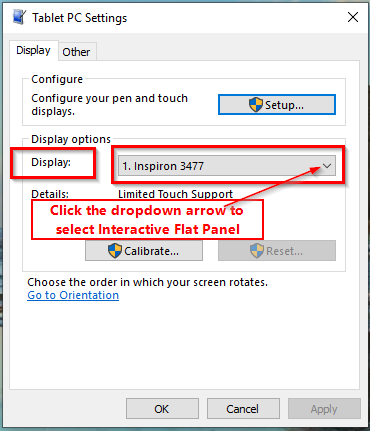
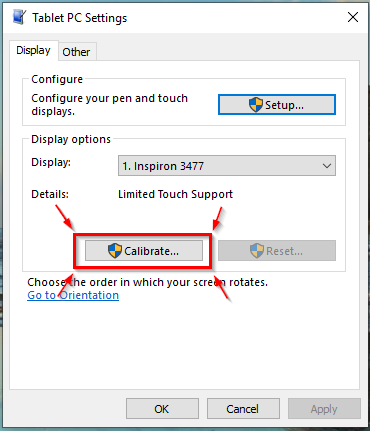
Because of its interactive capability, it is important to calibrate the IWB to align your touch points to the desired areas on the computer. Failing to calibrate your IWB can result in embarrassing and frustrating moments during presentations. To ensure your IWB performs optimally, follow these simple steps:
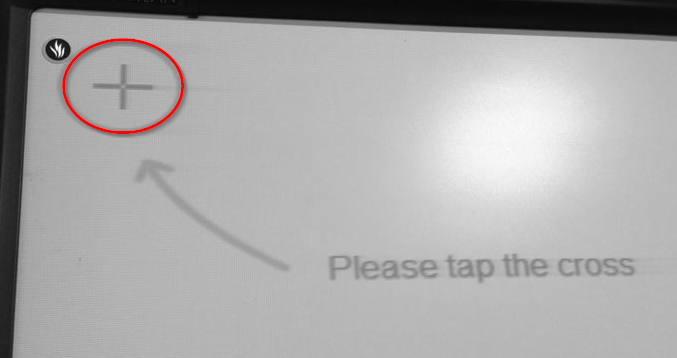
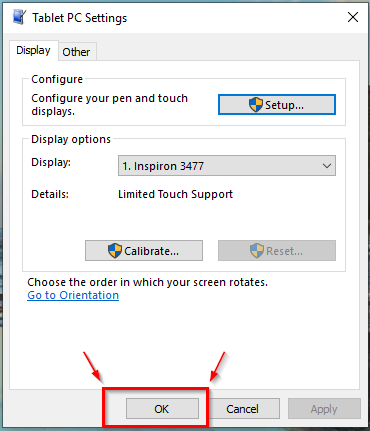
1. Open your Control Panel. From your computer, you can type “control panel” into the search panel at the bottom left corner of the screen, then press Enter on your keyboard.2. Select Tablet PC Settings.3. Ensure the Display option is set to Interactive Flat Panel screen. If it is not, then Click on the dropdown arrow to select.4. Click Calibrate.5. Touch each target using either your finger or an interactive pen. Ensure you touch the target in the center of the cross.Photo credit: Higgs, D. (2016). How to Calibrate the Promethean Pen. EVSC iCats. Retrieved from https://www.evscicats.com/2013/08/08/how-to-calibrate-the-promethean-pen/6. When finished, click OK on the Tablet PC Setting to set your calibration. Now you are ready to use your IWB!
There are many experts that contribute to new media theories and their relevancy to the work of technical communicators. I will introduce the theories of three experts then draw similarities and differences among them.
Lev Manovich: He proposes that new media is a distribution platform. Manovich (2003) defines new media as “the cultural objects which use digital computer technology for distribution” (p. 16-17). Many variations of new media such as “Internet, Web sites, computer multimedia…and computer-generated special effects” (Manovich, p. 17) are computerized methods with which technical communicators deliver messages. In his book, The Language of New Media, Manovich presents five principles of new media: numerical representation, modularity, automation, variability, and transcoding. The principles of each characteristic are briefly described in the video below.
Janet Murray: She makes the point that computers are a new literary medium. This is due to both “consisting of the writing of procedural rules and the engagement of an improvising interactor with the rule-governed system” (Murray, 2003, p. 7). Technical communication is audience centric and today the medium choice is often through computer technology. Therefore, technical communicators tailor and package messages in the most effective way for the audience; often this is through combining rules of grammar and digitally technology with media like email, websites, e-books, blogs, and much more.
Eugenia Siapera: In Chapter 2 of the text, the author highlights how audiences are the driving force of media content. Siapera (2018) explains how user-generated content has exploded due to the “rising levels of education…as well as the dissatisfaction with the limits of mainstream media” (p. 33). In this way, audiences have chosen to break free from the voiceless confines one-way communication of old (i.e. radio and television) and instead contest and create content on websites and blogs. This demand for interaction and a voice changes the concept dynamic of mass media. Siapera (2018) explains how social media crowdsourcing campaigns are an example of this solicited brainstorming and collaboration (p. 35). For technical communicators, this new voice of the masses provides new ways in which to mediate between the writer and audience.
Common Ground Among Sources:
Each author focuses on new media delivering messages and content that audiences desire.
Manovich (2003) proposes that new media technologies “have become the greatest art works of today” (p. 16). He compared the influence of old and new cultural institutions and highlighted the significance of societal (audience) attention being the catalyst to the popular shift of new media (Manovich, 2003, p. 13).
Murray (2003) links digital media to fulfilling the human (audience) desire to connect with and “understand the world and our place in it” (p. 11). Hence, people’s desire to share and expound on thinking and creating.
Siapera (2018) presents Henry Jenkins concept of convergence as the “result of changing consumption practices by audiences or media users” (p. 36). Therefore, audience desire invokes changes in how new media is delivered.
Differences Among Sources:
Each author differs on the societal impact of new media.
Through the study of new media, Manovich (2003) a few examples of potential impacts:
“new technology will allow for ‘better democracy,’ it will give us a better access to the ‘real’ (by offering ‘more immediacy’ and/or the possibility to ‘represent what before could not be represented’)” (p. 19).
“it will contribute to ‘the erosion of moral values’” (p. 19).
Murray views the societal impact of new media as a expanding human thinking and connection. Some specific examples Murray (2003) gives are:
Collaborate thinking by “building shared structures of meaning” (p. 11).
“We will…invent communities of communication at the widest possible bandwidth and smallest possible granularity” (p. 11).
Siapera (2018) highlights the way with which new media continues or creates new inequalities (p. 20). A few areas of inequalities that Siapera (2018) outlines is:
Informational capitalism, which “relies on new media and technology, and…imposes their logic on all areas of production and consumption” (p. 21). Some examples of inequalities are:
“The informationalization of employment has led to a steady decline of agricultural and manufacturing jobs” (p. 22).
Flexible labour “in terms of distance, with telework…in terms of relationship to employers, with…freelance work” (p. 23). “The increasing precariousness of flexible labour has led to an emphasis on continuous training and lifelong learning, pointing to an increasing gap between the educated and skilled workers and the low or unskilled ones” (p. 23).
Political economy, which “emphasizes the ways in which processes of media production and consumption reproduce dominant relationships” (p. 27). With common business mergers and acquisitions of new media firms, conglomerates like Google have partnered with Ascensions and gained patents and licenses to own the medical record data of millions of oblivious citizens (Garcia, 2019).
Manovich, L. (2003). New Media from Borges to HTML. The New Media Reader. Ed. Noah Wadrip-Fruin and Nick Montfort. Cambridge, MA: The MIT Press, 2003. 13–25. Print.
I recently heard a well-known American influencer and motivational speaker say that she became successful due to sheer determination and an internet browser. She uses these facts to motivate others and eliminate their excuses to rise to her (or any) level of success. The underlying message is that if she can do it, anyone can. Like me, you may have heard similar rhetoric such as, “Pull yourself up by your bootstraps!” These types of statements negate the fact that many people do not have bootstraps—some do not even have boots! However, her statement sheds light on the connection of success and the internet. Is the internet the great equalizer?
Less than 50% of the world uses the internet (Siapera, 2018 p. 68). Although a number of factors contribute to this outcome, we must be familiar with two substantive elements of the demographics: income and education.
Income: “The more income one has the more likely one is to be online” (Siapera, 2018, p. 73). Income also determines the quality and speed of the internet service that one has access to. People in low-income brackets who cannot access the internet are not afforded the opportunity to shape the future of the internet. The graph below illustrates the contribution of income to this disparity with internet use.
Education: “Low educational attainment is linked to lower income” (Siapera, 2018 p. 75). It is no surprise, then, that college graduates are more likely to be online. The graph below illustrates the contribution of education toward this disparity of internet use.
The internet divide exists for younger students as well. Nearly one in five students from kindergarten to 12th grade do not have access to computers or internet connections (Anderson & Perrin, 2018). Data compiled from the Pew Research Center in 2018 explain that this “homework gap” disproportionately affects low-income families and people of color (Anderson & Perrin, 2018). In the event the coronavirus becomes a global pandemic, this will only magnify the gap illustrated in the table below.
The educational divide is so closely related to income disparities that it is easy to see that one is an extension of the other. The TED Talk below provides some insight to the roots and impact of this interconnectedness—the lack of access by structural design.
“How America’s public schools keep kids in poverty | Kandice Sumner.” (2016). TED. Retrieved from https://youtu.be/7O7BMa9XGXE
These realities bring Marshall McLuhan’s statement to the surface, that the medium is the message. He highlights how the medium—or form—shapes our experiences in life. McLuhan expressed how the medium is not neutral; it is comprised of both possibilities and constraints. What message exists here? How does this form shape the experience of the poor and/or uneducated and shape their identity?
These are aspects of the medium for the technical communicator to ponder. Since we use media and technology to provide user-centered information, we are required to test existing theories and evolve the media we communicate through. We are communicators at the core, therefore, we aught to be concerned with our audiences—what they like and dislike, who they demographically are and are not, and how media effects them.
Hope is not lost. There are resources available to help narrow these gaps. Here are just a couple:
The Federal Communications Commission provides subsidies for low-income households to access the internet at home, albeit with slower connection. (Siapera, 2018 p. 75)
For classrooms that have internet access but lack the correct level of technology, PBS and WEDU offer free resources that align with state standards. Check out this link for Florida K-12 educators.
The irony in the statement that all one needs to succeed is determination and an internet browser lies in the fact that millions of people cannot hear (access) the message. Our challenge is to help find ways to evolve the internet to equality in access.
New media is the term that describes the newest facets of communication that rely on computer systems. Eugenia Siapera (2018) provides us with “…three main alternate terms: digital media, online media, and social media” (p. viii). Examples of new media are blogs, Facebook, human-computer interface, video games and virtual reality. New media is interactive and it is largely portable because of technologies like smart phones/watches and laptops. Murray (n.d.) expounds on this idea, “Because of the interactive nature of the medium, the computer environment is not just immersive, it is animated” (p. 6-7). These facets are different from old media such as printed media or physically static media like vinyl records, radio, and television. Lev Manovich highlighted that the change from old media to new media lies in the “idea of the convergence between computational and communicative logic as characteristics of the new media” (Siapera, 2018, p. xi). On the other hand, Murray (n.d.) views media as, “a single new medium of representation, the digital medium, formed by the braided interplay of technical invention and cultural expression” (p. 3).
The video below is a brief synopsis of media’s trek through time.
All media is rooted in communication, and new media is filled with rhetorical basics. Marshall McLuhan is a theorist who provides a rhetorical view of media and “considers that speech, orality, was the first medium” (Siapera, 2018, p. 6). In a previous course I took (Visual Rhetoric in Technical Communication), I learned three basic rhetorical principles:
rhetorical situations (writer, audience, topic, purpose, and context)
rhetorical elements (invention, arrangement, style, delivery and memory)
rhetorical appeals (logos, pathos, and ethos)
New media maintains these principles while expanding the delivery (or tools) that technical communicators use. This expansion has been relatively rapid and requires that technical communicators not just adapt to the changes, rather to test the many theories and evolve the media (tools) they are communicating through.
References
Añonuevo, J. (2017, July 11). Evolution of traditional to new media. Retrieved from https://youtu.be/GA9Ld6HgqKM
What better way to define the dynamics of new media than to show it through this blog! My purpose is to showcase aspects of new media as I learn and create my own content for a college course I am taking this semester. I am a Professional and Technical Communication student at the University of South Florida Sarasota-Manatee. This Spring 2020 semester I enrolled in a course called “New Media for Technical Communication” because understanding new media is vital to my future. Professional and technical communicators must adapt to changes in media, test the many theories, and evolve the media they are communicating through in order to deliver clear messages to people as effectively as possible. During the first week of this course, I realized that defining new media can be tricky because of its history, complexity, and developments. Thankfully, I am learning from many field experts. I am excited to “Show and Tell” you all about it!


 Defining New Media